
How to Rank on ChatGPT: What Actually Works in 2026
 By fengcainiaoMarch 23, 20265 min read
Most people are asking the wrong question.
They ask: “How do I rank on ChatGPT?”
But ChatGPT doesn’t have rankings. It has citations — it decides whose words to repeat, and which source to hand to the user.
That’s a fundamental misframe. If you’re applying Google SEO logic to GEO, you’re not optimizing. You’re knocking on the wrong door.
This article is based on my own testing, not a theory roundup. I’ll tell you what I found, why it works, and what I’m doing about it. The project behind this data is a B2B supply chain management client — client details are kept private, but the numbers are real.
I. Same Content, Same Optimization — ChatGPT Drove 10x More Traffic Than Gemini
The data is clear.
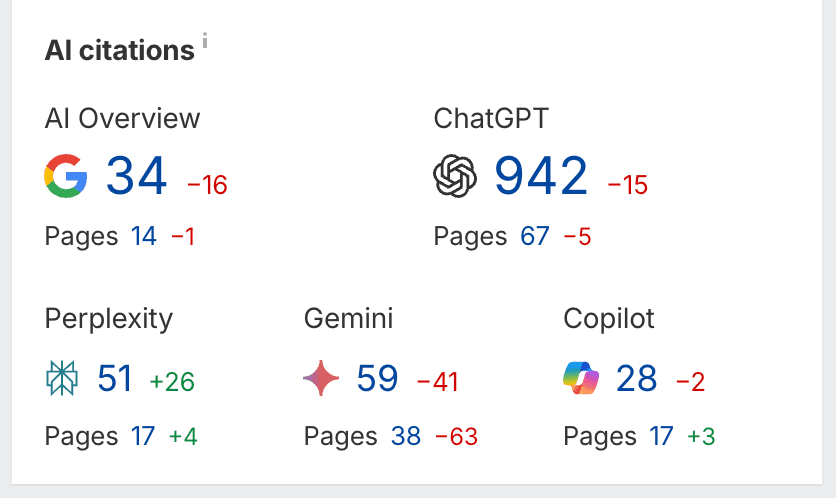
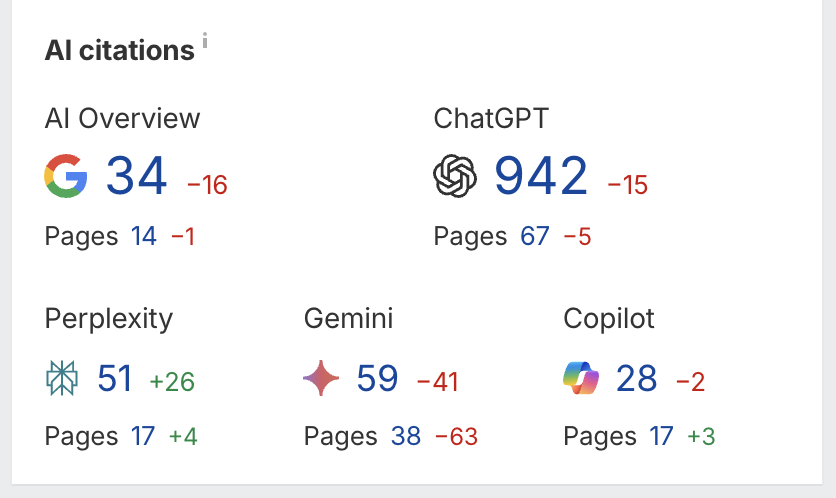
Same content. Same optimization actions. ChatGPT brought over 10x the traffic of Gemini.
This isn’t a content quality gap. It’s a citation mechanism gap.
How ChatGPT works: Active retrieval → inserts source links directly into the answer → users see the link and can click it. It’s doing distribution work for you.
How Gemini works: Digest → paraphrase → source link disappears. It absorbs your content, rewrites it in its own voice, and your website evaporates from the equation.
What does this mean in practice? In 2026, ChatGPT is the primary channel for AI-driven traffic. Gemini is a content influence channel — it spreads your ideas, but often without the click. If your resources are limited, go deep on ChatGPT first.
II. Why Your Google SEO Instincts Will Betray You in GEO
Traditional SEO logic: ranking = visibility = clicks.
The user sees you in the results, makes their own judgment, and decides whether to click. Trust is built by the user.
GEO logic is completely different: AI cites you = AI makes the trust judgment on the user’s behalf = the user arrives at your page with pre-established trust.
Think about what that actually looks like. The AI says: “According to [your site], X is actually simpler than most people think.” And the user thinks: “Interesting — let me read that.” They arrive already curious, already primed.
So when you ask “how do I get ChatGPT to cite me,” the real question is: is your content worth repeating by an AI that’s accountable to its users?
It doesn’t look at your DA. It doesn’t count your backlinks. It asks: does this sound like someone who actually knows what they’re talking about?
III. The Citation Layer: How AI Actually Decides What to Quote
I call this mechanism The Citation Layer — AI doesn’t produce information, it curates and repeats it. Your goal is to become the source that gets repeated.
ChatGPT tends to cite content with three characteristics:
1. A clear position, not a hedge
“It depends on your situation” will never be cited — there’s nothing to repeat. “ChatGPT drove 10x more traffic than Gemini on the same content” will be cited, because it’s a transferable conclusion.
Every article you write should contain at least 3 sentences that can stand alone — not as headlines, but as specific judgments inside the body of the text.
2. Answer first, explain second
The structure AI loves: question → direct answer → reasoning. Not: intro → context → buildup → answer buried at the end.
Put your conclusion in the first sentence of the paragraph. Every time.
3. First-hand data or original observation
Even a single-site experiment with modest data is worth more than citing someone else’s research. AI cites original observations. It ignores secondhand summaries.
IV. The Handoff Moment: Where the Best GEO Traffic Actually Comes From
Here’s the second insight that changed how I think about this.
Within ChatGPT-driven traffic, one category stands out: local service queries and guidance content that requires an authoritative source.
This traffic stays longer. Engagement is markedly higher.
Why?
Local is obvious — users want a service right now. The intent is immediate and concrete.
But the broader pattern is what I call The Handoff Moment — ChatGPT actively hands users off to external sources in two situations:
- The knowledge boundary: AI doesn’t have enough specificity to complete the task. Local regulations, real pricing, step-by-step execution, real-world services. It needs to send the user somewhere.
- The authority demand: The user needs a source more credible than the AI itself to feel confident making a decision.
Traffic that arrives through The Handoff Moment converts better than almost any other source — because the user didn’t arrive skeptical. The AI already vouched for you.
The practical implication: If you want high-quality GEO traffic, prioritize two content types — professional judgment in your field that AI genuinely can’t replicate, and decision-guiding content where users need an authority to feel safe moving forward.
V. What Doesn’t Work (Stop Wasting Time on These)
- Keyword-stuffed titles: ChatGPT isn’t a search engine. It doesn’t do keyword matching.
- Generic “ultimate guides”: Content without a position can’t be cited, because there’s nothing quotable in it.
- Backlink-first thinking: Gemini might weight DA. ChatGPT weights the content itself.
- “AI-optimized” boilerplate: Adding a FAQ section does nothing. Useful answers do everything.
VI. What I’m Doing Now (RankingLab as the Experiment)
I’m using RankingLab itself to test this framework.
The site is new. GSC data is near zero. Non-branded traffic is essentially nothing. That makes it a clean experiment — no legacy signals, no inherited authority.
My hypothesis: if content quality is high enough, positions are clear enough, and first-hand data is specific enough, a domain with near-zero authority can generate measurable GEO citation traffic within 6 months.
I’ll keep reporting the numbers here. Whatever they show.
One Last Thing
GEO isn’t new SEO.
It’s a return to what SEO was always supposed to be about: content written for humans is what AI will cite.
Because AI’s job is to satisfy the user. And what satisfies users has always been the same thing — something that’s actually useful.
→ If this was useful, find me on Twitter: @yanasongvv. I track GEO and AI search with real data, not recycled takes.